
Five trends that will impact tech and culture in 2026
As technology speeds up, culture slows down. These five shifts reveal how people will reclaim clarity, attention, and connection in 2026.

With December approaching, I’ve been thinking a lot about where technology is heading and how our relationship with it is shifting.
As usual at the end of the year, companies and experts are beginning to publish glossy forecasts about what’s coming next: more AI, newer models, faster chips, bigger data centers, and new devices promising to save us time while quietly demanding more of it.
And they won’t be wrong. 2026 will absolutely bring more. LLMs will keep accelerating. Companies will chase the next breakthrough with even more urgency. The AI boom will keep swelling and maybe even begin to show its first real cracks. The industry isn’t easing up; it’s shifting into a higher gear.
But while tech barrels forward, people are starting to move differently. This past year revealed something that didn’t show up in any of those decks: saturation. Somewhere between the AI-generated sludge, the relentless notifications, and the sense that digital life was speeding up without intention, a quiet recalibration took hold.
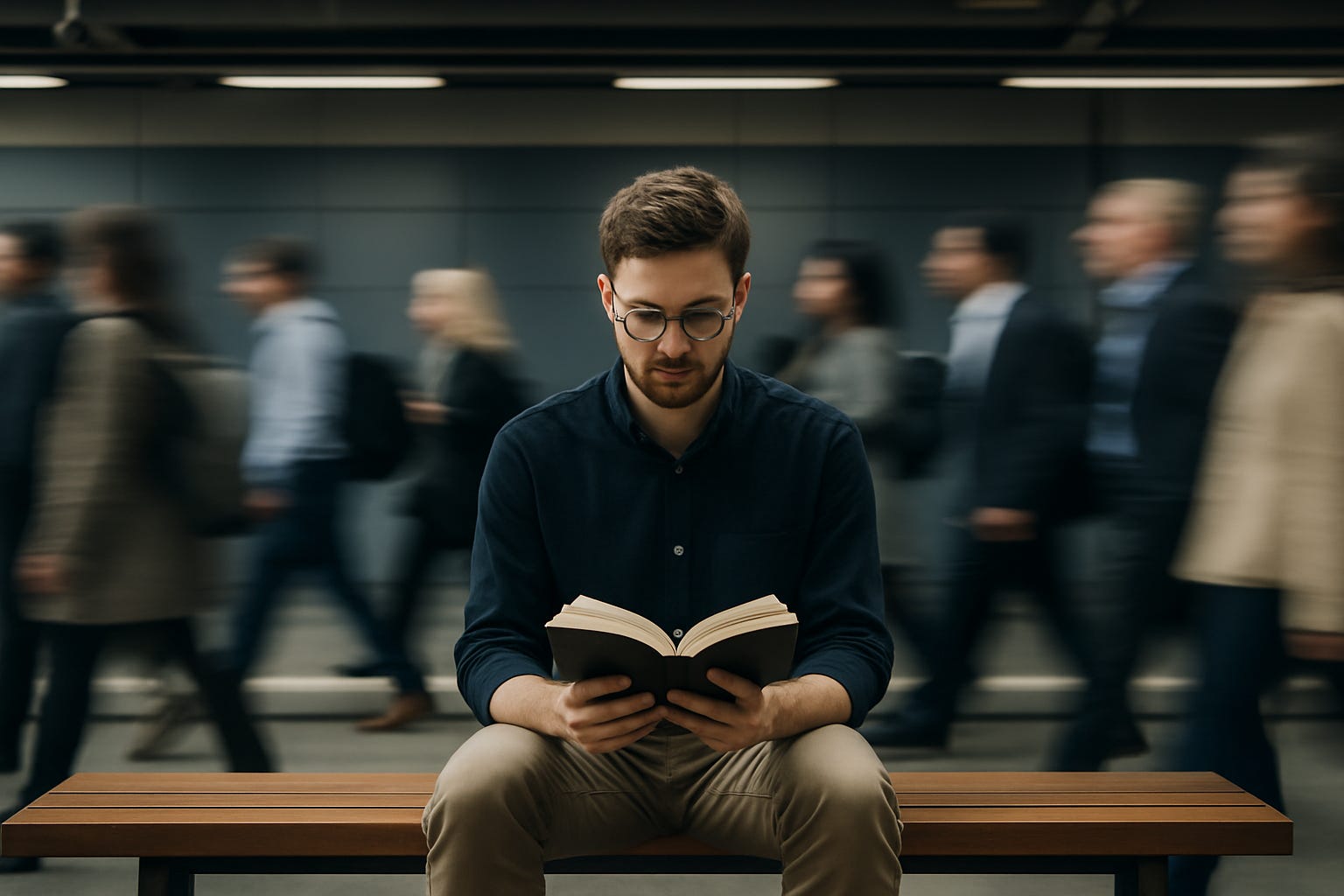
Instead of trying to keep up, people started taking back control — pruning feeds, curating inputs, choosing smaller circles, and seeking experiences that felt grounded rather than algorithmic.
Not a revolt, but a reset. A recognition that while technology will keep accelerating, our attention won’t. And in 2026, that tension — an industry in hypergrowth and a public becoming far more selective — is what will shape the year ahead.
This isn’t a comprehensive forecast. Just five shifts among many that signal where tech’s acceleration and culture’s recalibration are most likely to intersect in 2026.
Here are five trends that will redefine the year ahead as I see it:
1. Intentional tech goes mainstream
The slow drift toward digital minimalism becomes a cultural norm. People aren’t abandoning technology but reshaping their relationship with it. Intentional tech becomes everyday behavior, with phones configured like diets rather than slot machines, notification systems pared back to essentials, and home screens designed for clarity rather than compulsion.
And the tools already exist. Minimalist Android launchers and stripped-down iOS layouts have long had cult followings. Still, they’re becoming more common as people look for ways to tame their digital environments. Focus apps, habit-based interaction tools, and distraction-limited devices like the ReMarkable, Kindle Scribe, and Supernote are growing because they offer something modern computing rarely does now: a surface free of noise.
Hardware choices reflect the shift, too. Flip phones and non-flagship devices no longer signal compromise; they signal priorities. The Light Phone, Minimalist Phone, and Unihertz Titan aren’t just curiosities anymore. They’re lifelines to many people. Physical keyboards, once written off as relics, are re-emerging through devices like Clicks and BlackBerry-inspired hybrids. There’s even a growing campaign to bring back BlackBerry that I’m confident will pick up steam in 2026.
The clearest mainstream nod came from Apple’s recent Mac campaign — which I wrote about earlier — positioning computers not as dazzling marvels but as humble, reliable tools. It aligned perfectly with a mood that’s been building: we don’t need more spectacle; we need technology that respects our time.
In 2026, intentional tech isn’t niche. It’s expected.
2. Attention becomes the battleground
For years, “data is the new oil” shaped how tech companies measured value. AI has broken that metaphor. When models can generate infinite content, synthesize signals, and produce new data out of thin air, information stops being scarce. What becomes scarce — painfully, unavoidably scarce — is attention.
And beneath that scarcity lies an even harder constraint: time.
You can automate tasks, offload work, and hand administrative drudgery to AI agents. But nothing creates more hours in the day. Time is the fixed boundary that governs every choice. Every notification, every feed, every “quick scroll” competes against the same limited pool.
In 2026, people begin treating their attention as something with real cost because they finally feel it in hours lost. The guiding question becomes: “Why this?” Why this app, this creator, this message, this brand, this platform?
Brands feel the shift, too. High-volume outreach collapses under its own weight. Mass pitching lands flat for its insincerity. AI-written emails get ignored because they carry the unmistakable imprint of effortlessness. And, if a message costs the sender nothing, it signals that the recipient’s time isn’t valued either.
Trust replaces reach. Companies invest in deeper, more intentional relationships with those who already command public attention: journalists, analysts, Substack writers, podcasters, niche influencers. Not because they’re loud, but because their audiences trust them.
This shift isn’t just about attention as currency. It’s about time as the ultimate limit and the one boundary that technology can’t engineer its way past.
3. Curators and tastemakers become cultural infrastructure
If attention is scarce, curators become the guides who help allocate it. And in 2026, their role becomes structural.
Newsletters function like personalized morning editions. Podcasts become orientation rituals. Critics, analysts, journalists, and niche commentators regain influence by helping audiences understand what matters, what’s real, and what deserves their time. In an era of infinite content — news, entertainment, music, recommendations — a trusted human voice becomes an anchor.
AI can summarize, but it can’t replicate judgment. It can’t build the trust that comes from someone consistently helping you make sense of the world. That’s why people aren’t looking for more recommendations; they’re looking for the right ones. The creator-reader relationship doesn’t broaden; it deepens.
This shift is ultimately about interpretation and the rising value of people who help others navigate a world overflowing with choices.
4. Tactile hobbies and nostalgia become the counterweight
As digital life becomes more synthetic, physicality becomes the antidote. Tactile hobbies that once felt niche will surge even further into mainstream culture: ceramics studios humming on weeknights, woodworking classes with waitlists, journaling sections becoming social hubs, film labs booming again, sewing and repair culture spreading through communities tired of disposable everything.

Tech echoes this instinct, too. Film cameras aren’t ironic; they’re grounding. Mechanical keyboards become miniature craft projects. Portable consoles, cartridges, and physical media hold their own because they offer something digital experiences rarely do: presence.
This isn’t a rejection of technology. It’s simply a rebalancing and a reminder that meaning often requires friction.
5. Community and experience become the new status symbols
As digital acceleration intensifies, the rarest experiences become the ones that don’t scale. Workshops. Clubs. Small reading groups. Creative meetups. Neighborhood gatherings. Micro-retreats led by writers and creators. Cafés and maker spaces serve as third places for people who want connection, not just content.
The premium experience is presence. Because it requires time, or the very thing people have realized they’re losing.
For brands, this reality is impossible to ignore. Connection outweighs campaigns. Ecosystems beat impressions. The question shifts from “How many saw it?” to “Who felt part of it?” Community becomes the new marker of relevance.
The concluding throughline
All five trends point in the same direction: 2026 is the year people reclaim authorship of their digital lives.
Technology will keep accelerating — more models, more agents, more automation, more hype — but culture won’t be swept along passively. People are drawing boundaries. Choosing clarity over noise. Favouring depth over volume. Turning to physicality, community, and trusted guides to navigate the chaos.
One of the biggest stories of next year will be the quiet but profound recognition that attention is worth defending. And once people start protecting their attention, everything else changes.
The idea of time as the ultimate constraint really hits home. We can generate infinite content but can't manufacture more hours. The surge in tactile hobbies makes perfeckt sense when you consider how much of our days feel increasinly virtual and untethred. Film cameras and mechanical keyboards arent nostalgia, theyre grounding mechanisms when everything else feels too frictionless to be real.