
‘Bring Back BlackBerry’: The intentional tech movement just got its rallying cry
In a world full of AI slop, a grassroots campaign kickoff in Brooklyn says more about our attention crisis than nostalgia ever could.

On Wednesday night in Brooklyn, inside a tech-themed café called Coffee Check, a group of enthusiasts gathered over beer, wine, and pizza to mark what might someday be seen as the start of something.
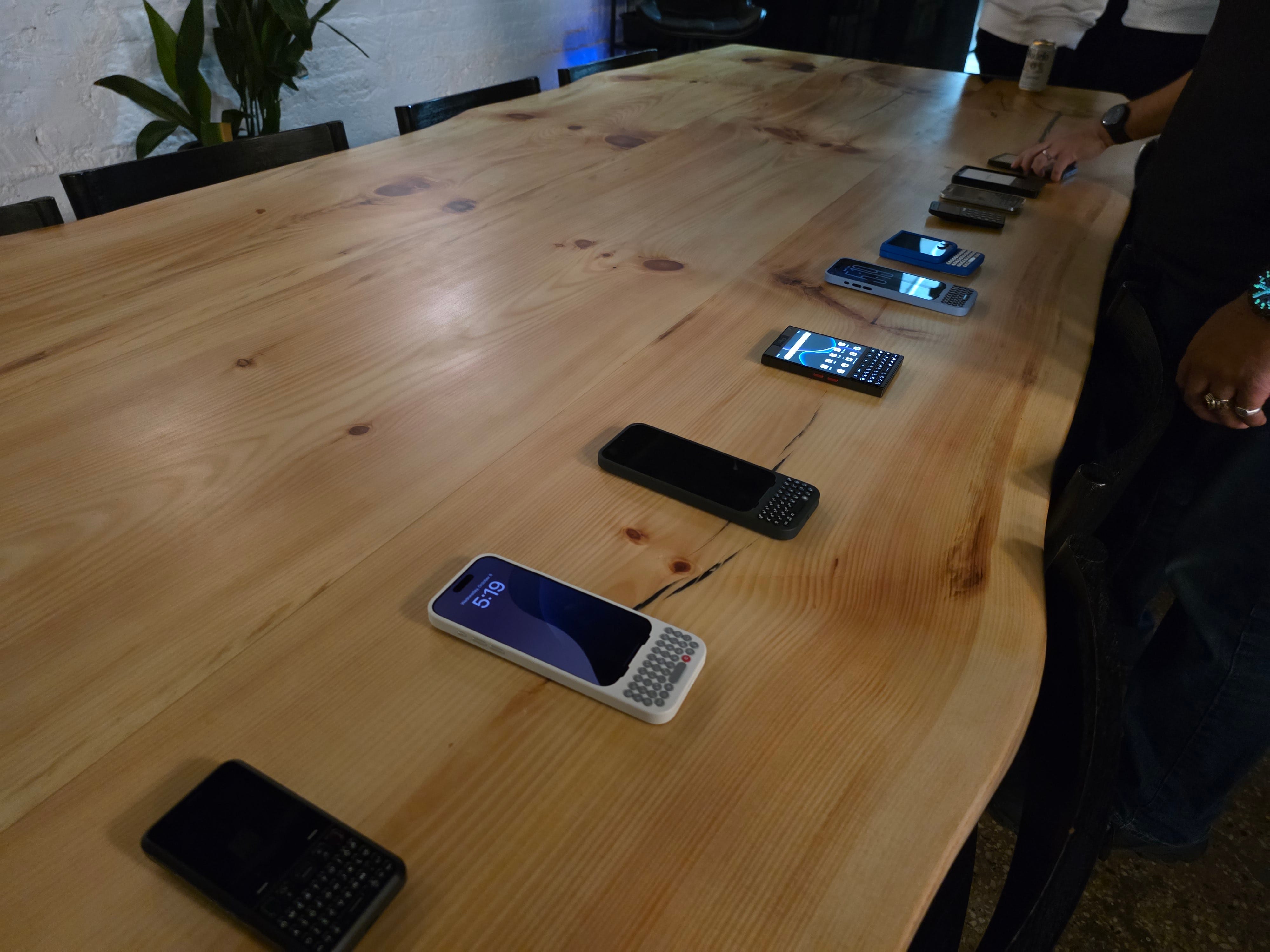
On a long wooden table stretched a lineup of phones — old and new, from classic BlackBerrys and Nokias to modern minimalist devices like the Light Phone, Minimal Phone, Punkt MP02, and Clicks Keyboard-equipped iPhones. The setup looked like an evolutionary timeline of intentional design: from the tactile era to the touchscreen one, and now, maybe, back again.
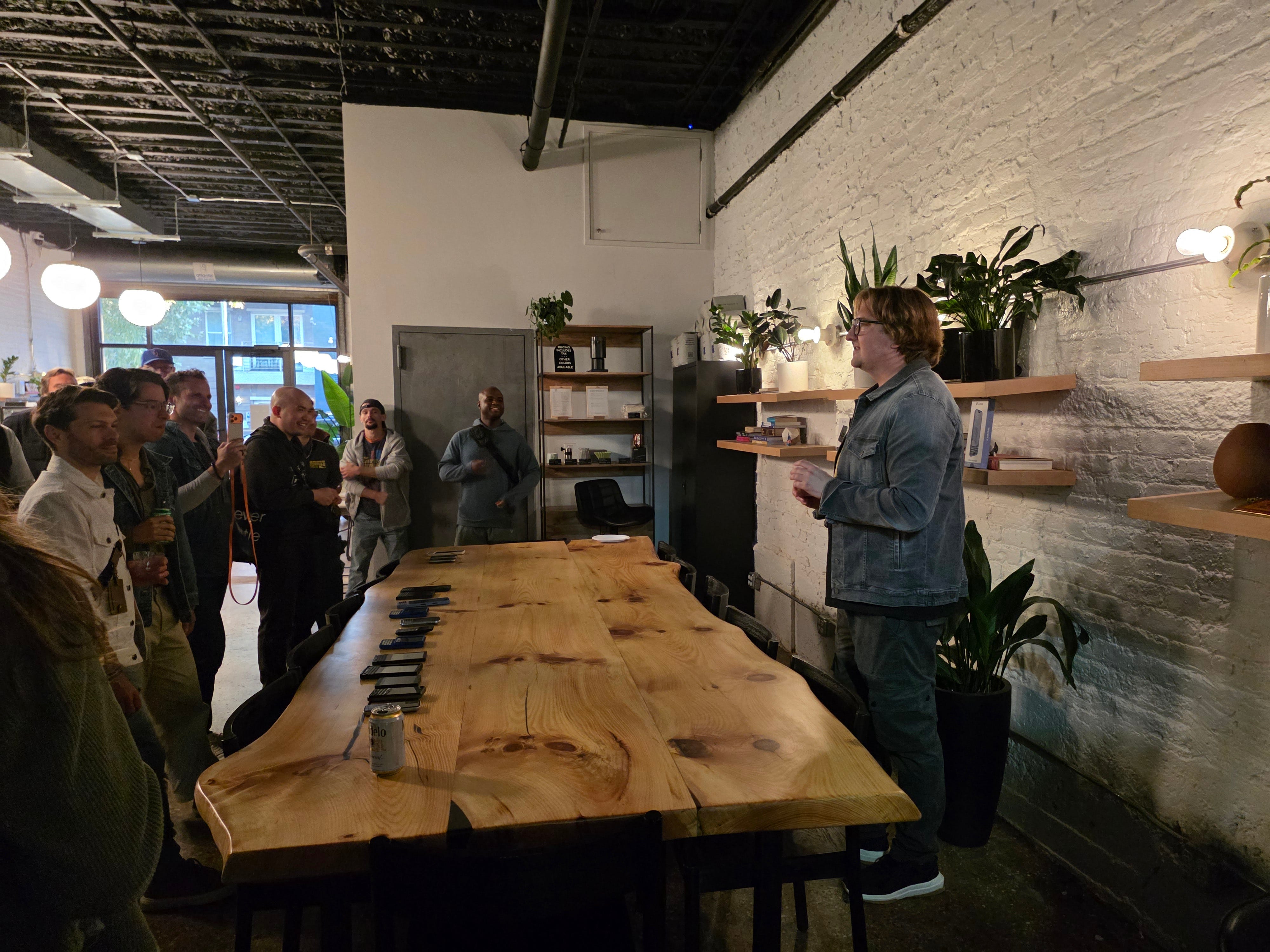
At the front of the room stood Kevin Michaluk — famously known as CrackBerry Kevin — the longtime evangelist of QWERTY culture. “Remember this night,” he told the crowd, “it’s where it all began.”
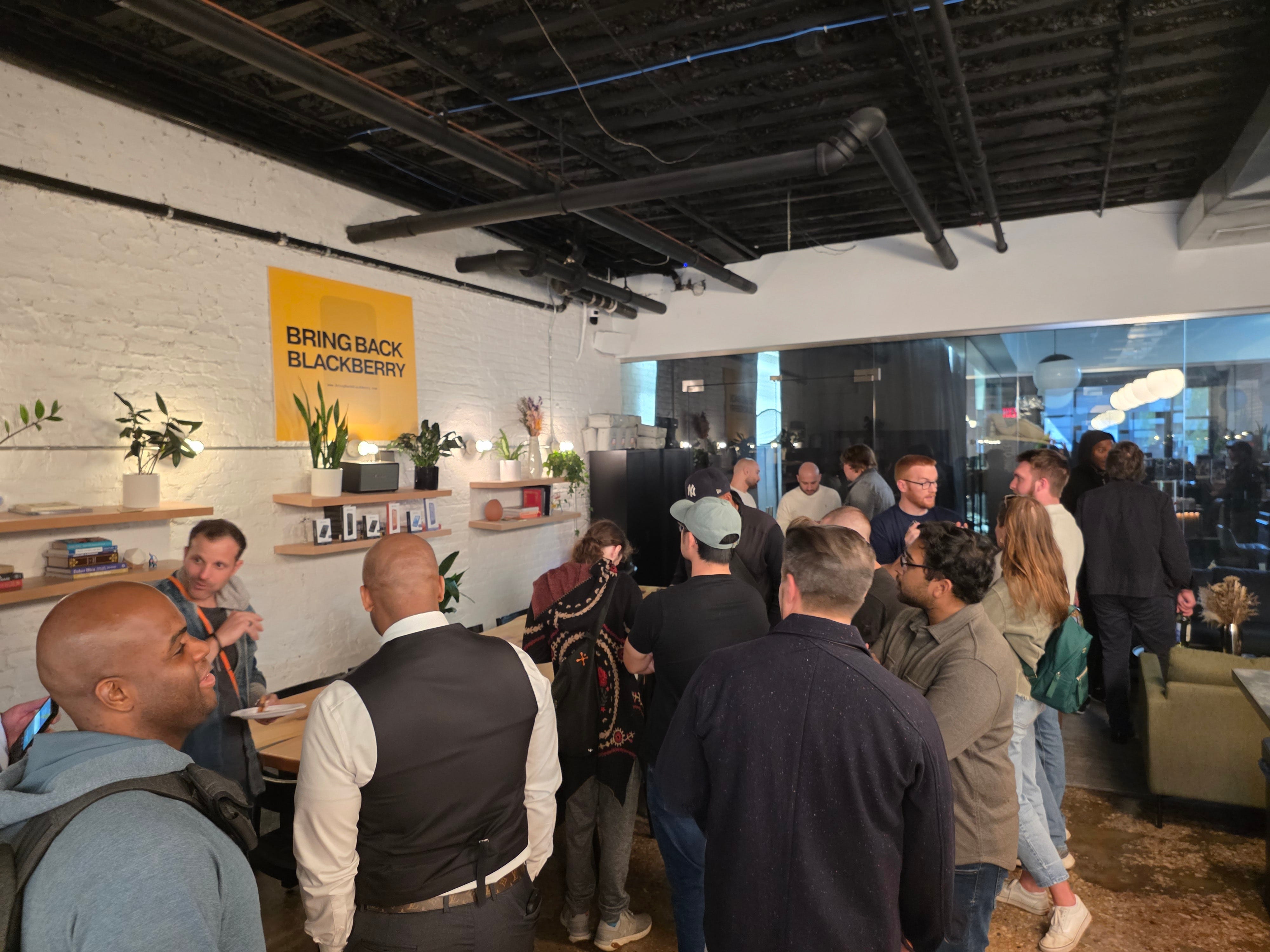
The night was the official launch of the Bring Back BlackBerry campaign, a five-year plan to reignite not just a brand, but a philosophy of technology.
The setting couldn’t have been more fitting. Coffee Check, owned by tech YouTuber David Cogen, is a space that feels equal parts repair shop, espresso bar, and creative lab — a place where gadget lovers come to talk about the things they love.
Around the room were founders of the Minimal Phone, Light Phone, and Punkt, along with tech creators, hobbyists, hardware tinkerers, and fans who still carry physical keyboards in 2025. Some had driven in with boxes of legacy devices to share. Others were there to try out new prototypes, like the Unihertz Titan 2, Keyphone, and BlackBerry Q25 by Zinwa.
It wasn’t a flashy product launch. The organizers deliberately kept it small — part community meetup, part historical exhibit, part brainstorm. The tone wasn’t corporate or wistful. It was hopeful. You could feel that shared belief: that tech could once again be human-scaled, not habit-shaped.
Over a year ago, in July 2024, I wrote about this growing fascination with intentional tech — a movement of consumers choosing slower, simpler, more deliberate devices. Back then, it felt like a whisper: a handful of people quietly replacing smartwatches with analog ones, swapping tablets for e-ink, and simplifying their phone screens. It felt personal, almost subcultural. But standing in that café last night, I realized the whisper had become a rallying cry, and maybe even the start of a movement to take our attention back.
In that earlier Substack post, I wrote: “The idea of tech minimalism is not about rejecting technology entirely but making thoughtful choices to simplify and enrich our lives.”
That still holds true. But what’s changed is the scale. Back then, I pointed to devices like the Light Phone, Remarkable 2, Niagara Launcher, and Boox Palma as early signals of experiments in restraint. Now those experiments are multiplying and organizing. The campaign unfolding last night felt like the next evolution: minimalism stepping into the public square.
What struck me most was how diverse the crowd was at the event. It wasn’t just diehard BlackBerry nostalgics (though there were plenty of them swapping stories). It was also younger fans discovering the charm of buttons for the first time, product designers talking UX philosophy, and e-ink enthusiasts comparing refresh rates. The room had that rare blend of generational overlap and shared conviction.
That’s precisely what Michaluk’s manifesto taps into. In his Bring Back BlackBerry post, he argues that Gen Z’s rediscovery of tactile keys isn’t nostalgic weirdness — it’s a sign of a cultural need. “They’re discovering what us OGs have always known,” he writes. “That buttons have power. That a phone designed for communication, not consumption, is actually good for your brain.” He’s right. It’s less about the brand and more about what it represented: clarity, control, and connection without the algorithmic intermediaries.
And that sentiment is catching on. During the event, the founder of the Minimal Phone told me that the recent surge of interest in devices like the Boox Palma, thanks to ongoing coverage from The Verge and others, has created a halo effect for the entire category. It’s like we’re all benefitting from the same wave, and it’s no longer about one product winning. It’s about the philosophy winning.
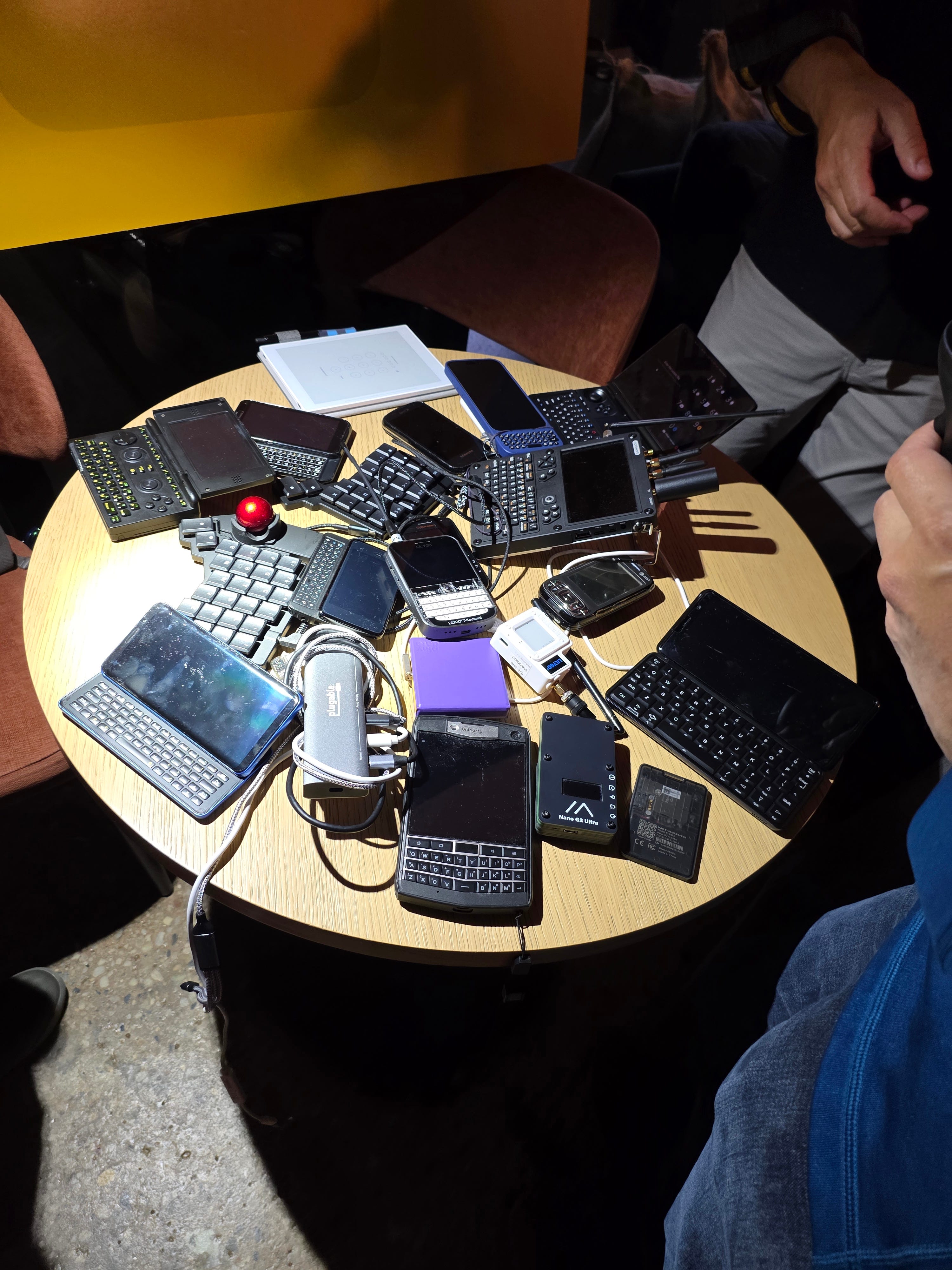
Near the back of the room was a small round table full of devices from an enthusiast’s personal collection, including old keyboard phones, gaming accessories, and even a few obscure imports. It looked like a living archive of everything this movement stands for: tools that invite participation, not addiction. As people passed them around, you could feel both reverence and curiosity. These weren’t relics. They were reminders of what we’ve lost and what we might be ready to rebuild.
It’s not hard to see why this moment is landing now. The past two years have been a perfect storm of digital exhaustion: AI slop clogging feeds, election cycles ramping up, and doomscrolling as default. Even the most well-meaning tools have turned into attention traps. What used to be convenient now feels invasive. In that kind of world, a physical keyboard isn’t just a design choice but a boundary.
Minimalist tech has stopped being a novelty. Clicks has already sold over 100,000 units, generating $7-million in revenue across more than 100 countries, with nearly half of its customers having never used a BlackBerry before. The Boox Palma has gone from niche e-ink experiment to mainstream curiosity.
These small wins add up to something cultural — a countertrend growing in parallel with generative AI, not in opposition to it but as its consequence. The more friction we remove from our digital lives, the more we seem to crave some of it back.
No definitive roadmap was offered Wednesday night, just ambition (so far). The Bring Back BlackBerry campaign seemingly hopes to attract attention, collaborators, and maybe a licensing deal with BlackBerry itself (or even a branded Clicks–BlackBerry hybrid). Michaluk’s manifesto lays it out plainly: if they can build enough collective voice through the petition and brand partnerships, they can make a legitimate approach to resurrecting the brand.
Success might not mean mass commercial dominance. It might mean reviving a single model, co-branding experiments, or inspiring a new category of devices altogether. Or it could be something less tangible, like a shift in expectation. The idea that minimal, tactile tech doesn’t have to live in the accessory aisle, but can once again take center stage.
Because that’s really what this is all about. The BlackBerry was built for urgency. Now it’s being remembered for boundaries. Maybe that’s progress, or maybe it’s just clarity.